Actualité et enjeux du concept d'émergence en sciences cognitives, ARCo/CREA/ISC, novembre 2010
#HASHTAGUNSET on Twitter, identi.ca, Live Cast, TwitterStreamGraphs, Collecta, flickr
Attended activities
Presentation ARCo
- historique 1981
- taille ~130 membre
- but conf, intellectica, review, atelier, ecole ete, ...
Introduction : quelques variétés d'émergences et d'émergentismes en philosophie de l'esprit
par Pierre Steiner (14h15-15h00)
- introduction : enjeu philo et epistemologique de l'E et de l'emergentisme
- differentiation reductible/irreductible
- emergentisme = realite de E
- E = meca ou proprietes E
- E epistemologique != E ontologique
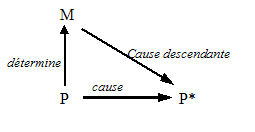
- E epistemologique macro-struct avec impossibilite de prediction base uniquement sur les constituants (causalite descendant / downward causality)
- E ontologique
- mention de [Kim 1998] [Kim 1998] (cf ref)
- inverted correlation between success of reductionnism and emergentism
- E permet d'etre moniste sans etre reductionniste
- E rejection du dualisme
- monisme materialiste, ontologie moniste physicaliste
- conception strategifie de la realit : continuite ontologique, pliralite epistemologique
- schema
- Particules / Atomes / Molecules /Genes / Cellules / Organismes / Consciences / Societes
- cf LayeredModel
- perspcetive historique
- Aristote Metaphysique
- effets et lois homopathes vs effets et lois heteropathes Mill 1843
- prop E vs prop resultantes Lewes 1875
- Alexander 1920
- req
- materialisme
- prop systemique et que
- determination synchronique (?)
- E et conscience phenomemnale en philosophie esprit
- 3 strategie pr definir et invoquer E
- proprietes E comme proprietes systematique non-agregatives
- pas simplement addition des parties du systeme
- propriete emergentes sont des props systemetique non aggregative William Wimsatt (2000)
- importance des interactions les composants individuels
- l'addiditive qui semble etre la regle en physique ne ne l'est plus pour les autres niveaux, importance des interactions
- "Discussions of emergent properties in nonlinear dynamics, connectionist modeling, chaos, artificial life, and elsewhere give no support for traditional antireductionsm or woolly-headed antiscientism." Wimsatt 1997
- comportement non deductible de loins qui regissent le comportement des parties, les lois presentes au nieau systematique ne sont pas ddutibles des lois du micro-niveau, ce sont des lois fondamentales
- B McLaughin 1997
- ehec de la tentative de reductionnisme
- caractere emergent de la conscience phenomenale
- Searle/Kim/Varela&Thomson
- la causalite descendante est formelle et topologique, elle est structurante, Thompson 2007
- schema de causalite descendante avec triangle P->P1 && P -> P1 && M~> P1 (a a Kim 2006)
- ouverture : caractere emergent de la conscience et immersion env. de la cognition
- oriente par l'activite consciente de l'organisme
- couplage organisme/environment ? (a la Brooks)
- Q&A
- jamais "enaction" d'evoque
- combinatoire
Back to the Menu
Émergence, Neurosciences et Conscience
par Catherine Tallon-Baudry (15h00-15h45)
- definition of E
- The modular model of the visual system and its limits
- functional model of the visual system
- functions or boids or units
- structured, layered, ...
- Criterion for the existence of a functional area (~module)
- cytoarchitectony
- retinotopic mapping
- feature selectivity
- Existence of feature- and domain- processing modules
- Specific modules or distributed coding?
- A hierarchical, serial modular model?
- Cardinal cell (but with combinatorial explosion problem)
- Encoding new objects
- mention of pruning (cf Without Miracles)
- require a wealth of available neurons and their connectivity
- Superposition catastrophe
- cf Varela's thesis
- Emergence & Perceptual Binding
- the binding problem and superposition catastrophe
- e.g. girafe behind a green tree
- binding problem
- illusory conjunctions
- gamma oscillatory synchrony could solve it
- gamma oscillation in humans and coherent percept
- Controversy
- oscillations does not exist
- when they are seen it is an artefact
- they exist but do not have a functional role (epiphenomenon)
- what is at stake
- neural code, population code
- brain as an orchestra
- properties of functional modules
- interactions between functional modules
- mechanisms of neural cooperativity? is a conductor needed?
- Emergence & Conscousiness
- conciousness is not localized
- no focal lesion can disrupt consciousness
- localization leads to conceptual problems
- need for a model of interactions in a highly interconnected system that would create a whole with emerging properties
- explanatory gap
- lack of an explanation of mental life in physical/biological terms
- how can phenomenal human experience be explained solely in bio/phys terms?
- dualism
- "trick" of emerging properties
- attempt at reductionism unsuccessful (so far)
- no def. of what conscious experience is; field relying on agreement and operational def
- E as alt to reductionism
- quoting Searle "Where appearance is concerned we can't make the appearance-reality..."
- (some) Conclusions
- E in neuroscience
- brain as a complex, highly interconnected system
- E could be particularly useful when studying consciousnes
- How to direct E and E properties in exp data?
- oscillations
- used for a variety of cognitive functions
- Q&A
- probleme de perspective
- interfaces entre systemes avec une experience subjective mais "reel" pour la personne qui percoit la representation et un substrat avec un comportement objectif
Back to the Menu
Commentaire
par Xabier Barandiaran (15h45-15h55)
- need for rigorous formalization, maybe from statistical mechanics
- E of what?
- visual perception, representations, intentions, intelligence, consciousness, emotion, ...
- Domains of E and integration
- sensorimotors "pyramid" / cortico-cortical interactions /cortico-subcortical interactions (body) / sensorimotors interactions (environment)
- The need of building blocks for theoretical structuring
- conceptual power of reduction
- building blocks of emergent theory of brain-body-behavior dynamics?
- Start minimal
- why not C. elegans instead of humain brain dynamics?
- ...and robotics?
- e.g. with phototaxis with 5 oscillators
Back to the Menu
Emergent Computation in Biochemical Networks: what material representations tell us about autonomy
par Luis Rocha (16h15-17h00)
- collective dynamics (eigeinbehavior and symbols)
- level 1 Dynamics
- level 2 attractors
- level 3 emergent classification
- eventually existence of "epistemic cut"
- evolution (in changing environment) requires
- selection (implicit: rate of reproduction) requires
- alternative dynamic configurations (to produce different behaviors) requires
- control of initial conditions (inheritable memory)
- Robot example (cf http://www.johuco.com/muram/muram.html )
- modules with well defined rules
- typical path, playing "chicken"
- biological interpretation of attractor behavior
- "credit assignment problem"
- loci of information
- paradoxically for life in the most inert object : DNA
- what matters is the information it encodes, not what it does
- comparison with computers and usage of silicon
- how do you use a system to transmit information from generation to generation
- models of evolution as a series of re-entrant networks
- studying emergence in complex systems
- explanation of CA
- mention of Turing Reaction–diffusion system (cf Fisher-KPP seen recently)
- quorum sensing or what decision to take? (Density Classification)
- local neighborhood (LNC)
- local strategy
- random (fails)
- majority rule (fails)
- evolutionary algorithm solving (inc. work at SFI)
- "bind" spreading of local information (P=53%-60%)
- integration and transmission of information across population
- creation of an algebra of Particle Interactions (cf SFI in the 90s) GA to evolve rules for DT (1994), Crutchfield and Mitchell & al.
- Rocha and Hordijk 2005
- semiotic closure (or "semiopoieis")
- dynamically incoherent memory
- syntax for manipulation, comm, and variation
- construction code
- semantics as a material affair, not a abstract surrogate relationship between internal and external element
- self-organization and selection
- dynamic component self-organize
- representations are selected : pragmatics
- schema redescription of look-up table, solution to redundancy
- wildcard symbol
- position free-symbol (interchangeable)
- applying to existing DCT solutions and compact them
- is it equivalent to delegating information to the interpreter?
- power of "boxing"
- "conceptual" space
- in schemata redescriptions of automata
- rules in schemata vicinity
- simpler to understand than particle mechanics in some cases
- cf Maques-Pita & Rocha 2010
- "looking at emergence you need to look at both domains at the same time"
- automata networks
- used in biology, finding canalization (canalization as form of redundancy thus compressible)
- dynamics canalization map
- unfolding dynamics with partial information
- uncovering (pathway) modules
Publications in Artificial Life, Unconventional Computing, ...
- mention of
- RNA editing, DNA recoding and the evolution of human cognition. John S. Mattick and Mark F. Mehler
- Andy Clark and extended cognition and the reliance on symbols external to the brain
- Varela
- Q&A
- CA by Wolfram as universal Turing machines
- yet any existence of non-reductionist computing system? not easily reducible?
Back to the Menu
Remarques critiques conclusives
par René Doursat (17h00-17h10)
- e.g. Natural science in the XIXth century
- macrolevel: laws of genetics < gap > microlevel: atoms
- mesolevel: molecular biology -> multiscale complex systems
- equivalent to cognitive science in the XXth century?
- macrolevel: symbols < gap > microlevel: neurons
- mesolevel: molecular cognition
- e.g. EEGs, chaotic attractor, bluecolumn, morphodynamic, polychronous groups, ...
- mesocognition
- tissue physiology = pattern creation -> brain patterns?
- ponds
- litteral informational paradigm
- bias of feed-forward view (engineering fantasy)
- rather emergent dynamical paradigm
- recurrent, perturbation, fine-grain scale
- nothing without the light of evolution thus development thus complex systems
- self-organized architecture
- swarm chemistry
- embryomorphic engineering
Back to the Menu
Institutions dedicated to complex systems
Ordered by date of discovery, from the oldest to the most recent.
Moved to ComplexSystems#Institutions.
Back to the Menu
Own position
- Defining emergence as a phenomenon that is "not in the rules" might lead to a misconception:
- the phenomenon is entirely in the rules and its environment, even if it appears out of interactions between multiple entities, the complex and unexpected result is only a proof of the incomplete understanding of those rules by an external interpreter that makes it appear as if is was not explicit in the rules.
Added to Heuristics#Emergence.
Other reviews
To do
- improve Template
- Trois essays sur l'emergence by Jaegwon Kim and translated by Mathieu Mulcey, Ithaque 2006
- WithoutNotesNovember10#GazzanigaEmergence
- LayeredModel
- http://plato.stanford.edu/entries/properties-emergent/
- cf earlier talk at FING regarding anatomical simulation (Paris Descartes?)
- TurtlesTermitesAndTrafficJams
- is fashion and its symbols (shapes and color) a social and thus power diffusion system?
- review the "no intrensic meaning" (own hermeneutic problem) coupling discussed with Paola as it seems more and more solely structured correlations matters (cf conv. ~Nov 10 2AM 2010)
- http://xabierbarandiaran.wordpress.com/2010/10/13/philogeny-of-the-notion-of-habit/
- automation of this principle?
- mention Nathalie Gontier
- convert
E to epistemology
- topology of a space of solutions?
- how to define the neighborhood of a solution space to search it more efficiently?
- one does not change the paradigm of designing a solution but rather the referrential itself, as in shifting from an euclidian geometry to a non-euclidian geometry
- check The Biocomplexity Institute, Indiana University
- integrate
- Complexity through map overview on Wikipedia
- ended with chat with Xabier Barandiaran on his blog post then with him and Luis Rocha on information waves across social networks and early signals
- see also Cookbook.News
- check Reduction, Explanation, and the Thermodynamic Limit at Boston University Center for Philosophy and History of Science, March 2011
- L'émergence by Patrick Juignet, Philosciences.com 2010
based on those talks + CRI talks + view on entrepreneurs as diffuser in Mardis Inno + Economie Entrepreunarial des Connaissances motivates me to focus on what I consider fundamental, embbed it somehow in a system and share it
 Fabien Benetou's PIM